Luxury In-Store Visuals: A Closer Look at the New P1.9 LED Install at Harvey Nichols
27 Feb 2026Luxury retail has undergone a significant transformation. In the heart of Knightsbridge, where competition for the attention of the sophisticated shopper is at its peak, the traditional shop floor is being reimagined. It is no longer enough to simply display products on shelves; brands must now create environments that resonate with the visitor on an aesthetic and emotional level. The recent installation at Harvey Nichols is a primary example of this shift, where digital architecture and high-end fashion meet. By moving away from conventional display methods and embracing a bespoke, geometric approach, this project demonstrates how technology can be used to sculpt a space rather than just fill it.
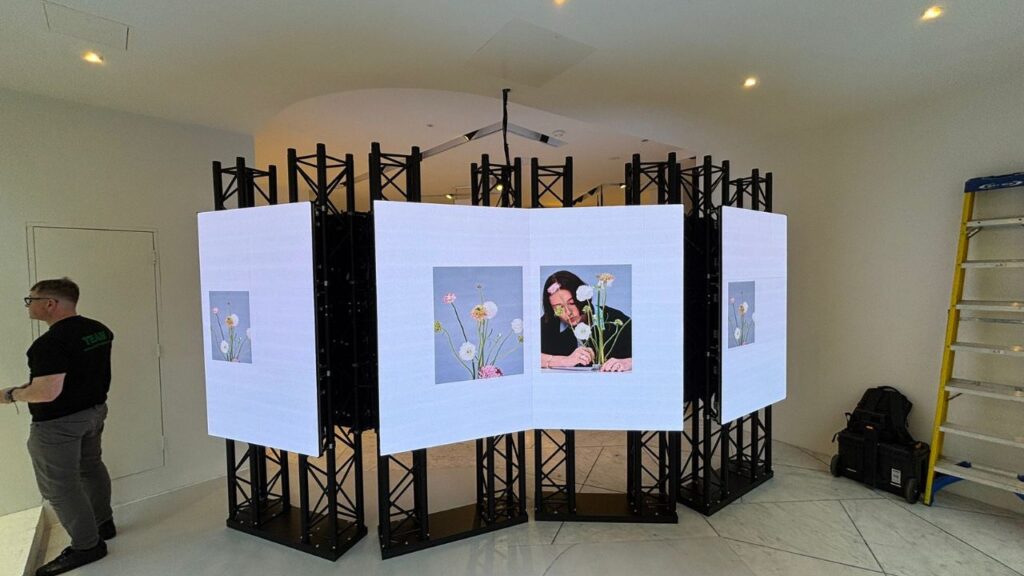
The centrepiece of this new visual strategy is a zig-zag screen configuration. Unlike the standard flat LED walls found in many retail settings, this installation uses depth and angles to create a more tactile and immersive experience. It is a bold departure from the two-dimensional plane, turning digital signage into a piece of sculpture that commands attention from every corner of the room. This setup, featuring high-resolution P1.9 LED rental screens mounted on a robust black truss system, reflects a sophisticated understanding of how modern shoppers interact with physical environments.
The Geometry of Engagement: Why Zig-Zag Matters
The decision to arrange the screens in a zig-zag pattern is far more than a stylistic choice; it is a calculated move to maximise engagement. In a busy department store, shoppers approach from multiple directions. A flat screen, while effective from a direct viewpoint, loses its impact when viewed from an acute angle. The zig-zag configuration solves this problem by ensuring that high-impact visuals are facing the shopper regardless of their path through the store.
As a visitor walks past the installation, the shifting angles create a sense of movement. The content appears to follow the viewer, with different facets of the screen becoming visible at different moments. This creates a multi-path engagement strategy that is perfect for luxury retail, where the goal is to slow the customer down and encourage them to linger. The zig-zag shape also creates digital alcoves—small pockets of space where the light and colour from the screens wrap around the viewer, making the experience feel personal and intimate rather than broadcasted.
Technical Precision: The P1.9 LED Advantage
In a luxury setting like Harvey Nichols, the quality of the visual output must be impeccable. The choice of P1.9 pixel pitch for this installation is critical to its success. Pixel pitch refers to the distance between the centres of two adjacent pixels; the smaller the number, the higher the resolution and the closer the “comfortable” viewing distance.
In a retail environment, customers are often standing within a metre or two of the display. If the pixel pitch were too large, the individual LEDs would become visible, breaking the illusion of a seamless image and making the display look “tech-heavy” rather than “art-led.” With P1.9 LED technology, the imagery remains incredibly crisp and detailed even at very close range. Whether the screens are displaying the delicate textures of a floral arrangement or the fine weave of a high-fashion garment, the details are rendered with lifelike clarity. This level of precision is essential for maintaining the premium feel of the brand and ensuring that the technology supports the product rather than distracting from it.
The Industrial-Chic Aesthetic: Black Truss and Artistic Contrast
The mounting system for this installation is as much a part of the design as the screens themselves. Utilising black trussing provides a striking industrial-chic aesthetic that contrasts beautifully with the clean, white lines of the Harvey Nichols interior. This choice avoids the need for heavy, permanent wall construction, allowing the screens to “float” within the space.
The black trussing serves as a frame, giving the installation a gallery-like feel. It suggests an environment of creativity and constant evolution—an industrial backdrop for the height of fashion. This look is particularly popular in contemporary retail design, where the “raw” elements of the installation are celebrated rather than hidden. It also offers incredible flexibility. The truss system allows for the screens to be angled precisely to suit the specific sightlines of the floor, ensuring that the visual impact is optimised for the physical layout of the building.
Sculpting the Retail Narrative
The content displayed on these screens is the final piece of the puzzle. When you have a geometric installation like a zig-zag wall, the content must be designed with the shape in mind. Standard 16:9 video content is rarely the best fit; instead, the visuals should be realised as a continuous narrative that flows across the different panels.
In the Harvey Nichols install, the use of high-resolution artistic imagery—such as the floral and portrait photography seen in the initial setup—turns the technology into a canvas. By spreading an image across multiple angled panels, the brand can play with perspective. A single subject can appear to transition from one screen to another, creating a feeling of depth that a flat surface cannot replicate. This is digital storytelling at its most sophisticated, where the medium and the message are perfectly aligned to create a memorable brand moment.
Agility and Versatility in Modern Displays
One of the often-overlooked benefits of using rental-grade screens on a truss system for a permanent-feeling installation is agility. Retail moves at an incredible pace, with seasons, collections, and themes changing several times a year. A permanent, built-in LED wall can be difficult and expensive to modify if the store layout needs to change.
However, the modular nature of the P1.9 LED screens and the flexibility of the trussing mean that the configuration can be adapted. If the store decides to move the display to a different department or change the angle of the zig-zag to suit a new floor plan, it can be done with relative ease. This ability to reconfigure and reinvent the space is a major advantage for any retailer looking to keep their environment fresh and exciting for returning customers. It ensures that the investment in technology continues to provide value even as the physical store evolves.
UNIFY VSN: Redefining Digital Architecture
UNIFY VSN specialises in taking these advanced technologies and integrating them into high-stakes environments. The Harvey Nichols project is a clear example of how technical expertise can be used to solve creative challenges. It isn’t just about putting up screens; it is about understanding the lighting, the sightlines, and the brand identity of the space.
By using high-performance P1.9 LED technology and creative mounting solutions, UNIFY VSN helps brands move beyond the limitations of traditional digital signage. The goal is to create digital architecture—features that are as much a part of the store’s design as the lighting or the furniture. This approach ensures that the technology feels integrated and intentional, providing a platform for brands to showcase their creativity in a way that truly resonates with their audience.
The Future of the Physical Store
The success of installations like the one at Harvey Nichols points toward a future where the physical store becomes a site for immersive discovery. As online shopping handles the transactional side of retail, the high street must focus on the experiential. High-resolution, geometric LED displays are the tools that make this possible.
They allow a store to change its mood, its message, and its aesthetic at the push of a button. They provide a reason for customers to visit in person, offering a visual scale and an immersive quality that a smartphone screen cannot match. By embracing the power of the zig-zag screen and the precision of P1.9 LED technology, retailers can create spaces that are not just places to buy, but places to experience.
Conclusion
The new P1.9 install at Harvey Nichols is a masterclass in modern retail visuals. By combining high-resolution technology with creative geometric configuration and an industrial-chic aesthetic, the project creates a unique focal point that enhances the luxury environment. It proves that when brands are willing to break the traditional “box” of digital signage, they can create something truly extraordinary. Whether it is through the crisp detail of the P1.9 pixels or the engaging angles of the zig-zag wall, this installation ensures that every shopper who walks through the doors is treated to a world-class visual experience. For those looking to redefine their space, the lesson from Knightsbridge is clear: the future of retail is dynamic, detailed, and beautifully angled. Contact UNIFY VSN today to explore how these visual solutions can be realised for your business.